

Implementing SAP Agent Performance Management (APM) solves an important problem for insurance organizations: it gives them a purpose-built platform for managing producer compensation and many of the complex processes surrounding it. But implementation is only the beginning.
Once APM is live, the challenge shifts. Plans change. Business requirements evolve. New questions emerge. Teams need help maintaining the platform, adapting it to new requirements, and determining whether they're actually taking advantage of everything the technology can do.
For some organizations, those responsibilities can gradually turn APM from a strategic platform into another system the internal team simply has to keep running. That's where managed services can play a different role, not by replacing the internal team, but by giving them access to specialized APM expertise when and where they need it.
Going Live With APM Isn't the Finish Line
An APM implementation is designed around the organization's requirements at a particular point in time.
And as the organization gains experience with APM, teams may identify processes they want to improve or functionality they weren't prepared to use when the system initially went live.
That means maintaining APM isn't simply a matter of keeping the system operational. The real question becomes: Is your organization continuing to get the maximum value from its investment in APM?
Without ongoing attention, there's often a gap between what the platform is capable of doing and how it's actually being used. Internal teams may develop workarounds because they're faster than reconfiguring the system. Enhancements may be continually pushed down the priority list. Knowledge can become concentrated among a handful of employees. Annual changes can turn into major internal projects.
None of those problems necessarily mean there's something wrong with the platform. Often, they indicate that the organization needs additional capacity or expertise to keep the technology aligned with the business.
Why APM Expertise Is Different
APM isn't a technology used by thousands of organizations across every industry. It serves a specialized market with its own processes, terminology, business rules, and operational challenges. That makes experience particularly valuable.
There is a difference between knowing how to administer enterprise software and understanding how an insurance organization actually uses APM to support its distribution and compensation operations.
When an issue arises, an experienced APM partner can look beyond the immediate technical request. Instead of simply asking, "How do we make the system do this?" the conversation can become, "Is this the best way to accomplish what the business is trying to do?" That distinction is important.
Sometimes the request an internal team brings forward isn't actually the best solution to the underlying problem. An experienced partner should be willing to identify that, explain why, and recommend a better approach. The goal isn't simply to complete tickets. It's to help the organization make better use of the technology over time.
What Can APM Managed Services Actually Help With?
The needs of every APM organization are different, which is why managed services shouldn't be treated as a rigid package of predefined tasks. For one organization, the immediate priority may be support for annual plan changes. Another may need additional expertise for enhancements or configuration work. Another may simply want an experienced resource available when its internal team encounters a problem it hasn't seen before.
Managed services can provide support across those day-to-day and evolving requirements while also giving organizations access to advisory expertise. That might mean helping an internal team evaluate a proposed change before it becomes a major project. It could mean identifying a more efficient way to configure a process. Or, it could mean helping resolve an issue more quickly because the partner has encountered something similar elsewhere.
Over time, that relationship can become less about responding to individual requests and more about continuously improving how the organization uses APM.
Your Internal Team Shouldn't Have to Know Everything
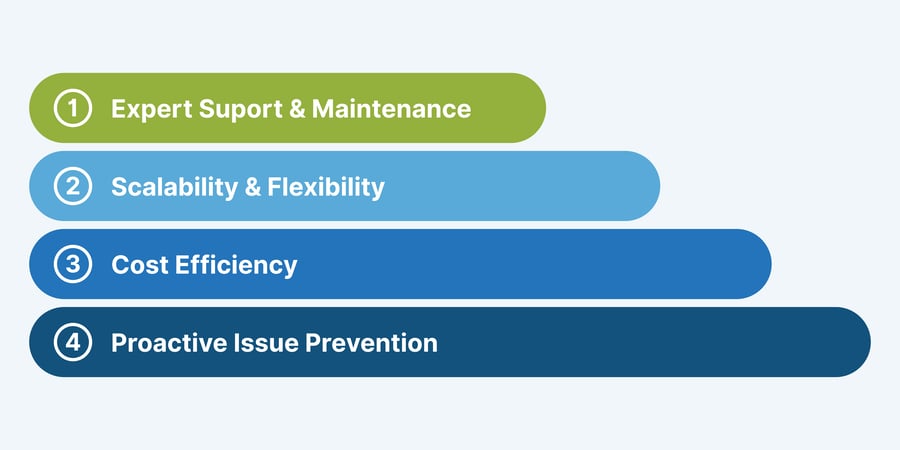
Working with a managed services provider can reduce your in-house IT costs by 40% while increasing efficiency by 50-60%. The benefits of ongoing external support after a solution's implementation are manifold. However, organizations don't necessarily need, or want, to outsource ownership of APM. Your internal team understands your business, your producers, your compensation programs, and the operational realities surrounding them. That knowledge is critical. But maintaining deep expertise in every technical and functional aspect of a specialized platform internally can be difficult.
Employees change roles. Experienced administrators leave. Workloads fluctuate. Large plan changes create temporary spikes in demand. New functionality introduces questions the team hasn't encountered before. Managed services can fill those gaps without taking control away from the people who know the business best.
Estimates suggest that over 60% of organizations will rely on managed services by 2025. Outsourcing some aspects of IT management is becoming standard practice for both organizations already leveraging sophisticated software solutions and those undergoing digital transformation.
Instead of building internal capacity for every possible scenario, organizations can supplement their existing team with specialists who work with APM regularly. Internal resources remain focused on the business while still having somewhere to turn when they need additional technical or strategic support.
Managed Services Should Be Advisory, Not Just Reactive
There's an important distinction between technical support and a true managed services relationship. Reactive support solves the problem in front of you. A strong managed services partner should also help you identify the problems you haven't recognized yet.
For example, an organization might request a specific configuration change because that's how it has historically handled a process. A partner with extensive APM experience may recognize that the desired outcome can be achieved differently, and more efficiently, using functionality the organization isn't currently leveraging.
That advisory perspective can be particularly valuable as APM environments mature. The longer a platform is in place, the easier it is for processes to become "the way we've always done it." Regular access to outside expertise introduces another perspective: Is there a better way to do this now? That can help organizations move beyond maintaining APM and begin optimizing it.
The Goal Is to Maximize the Technology You Already Own
When organizations struggle with an enterprise platform, the instinct can be to add something else. Sometimes change is necessary. But before adding more technology, it's worth understanding whether the organization is getting everything it can from the system it already has.
APM represents a significant technology investment. Maximizing that investment requires more than keeping the system online. It requires continually aligning the platform with changing business needs, maintaining the right expertise, evaluating new opportunities, and making informed decisions about how the technology should evolve. Managed services can provide the ongoing expertise to make that possible.
What Should You Look for in an APM Managed Services Partner?
Technical expertise matters, but it shouldn't be the only consideration. Look for a partner with direct experience delivering successful APM projects and supporting organizations after go-live. They should understand both the platform and the insurance business processes surrounding it.
They should also be willing to challenge you. A good partner doesn't automatically implement every request exactly as it was submitted. When there's a better approach, they should be able to explain it, recommend an alternative, and help your team understand why.
Most importantly, look at the partner's track record with its existing customers. Successful implementations and long-term, referenceable customer relationships provide a much stronger indication of what the managed services experience will actually look like than a list of technical capabilities.
A Real-World Case Study: Highmark & Canidium
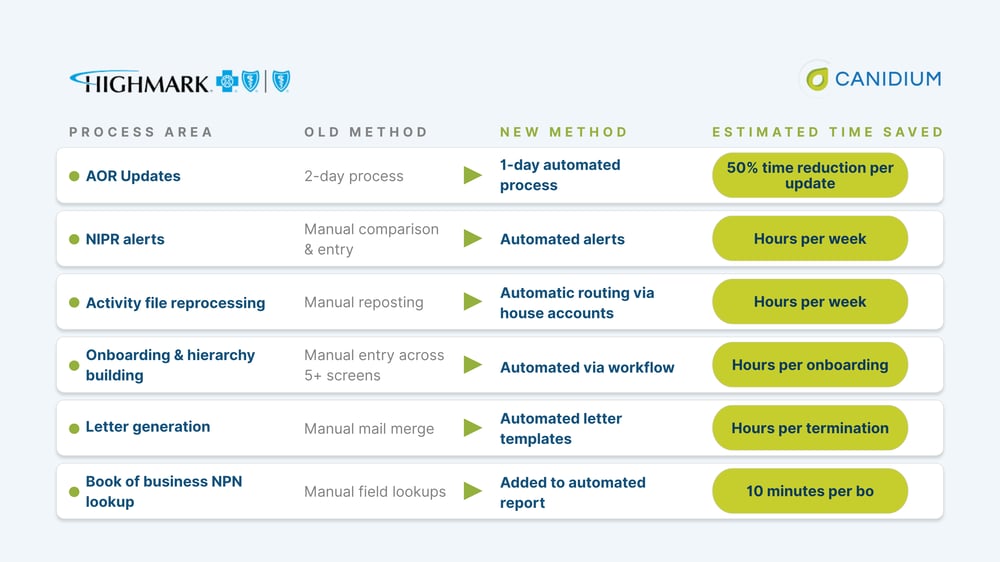
Canidium sat down with Highmark Blue Cross Blue Shield to learn how things changed post-APM-implementation. Here's what we discovered:
Why These Efficiencies Matter
Taken individually, each of these automation gains might seem like a small operational win. Together, they represent a major transformation in how Highmark runs its producer operations, one that’s measurable in hours, accuracy, and strategic impact.
Measurable Business Impact
Across the board, these changes contribute to real, quantifiable outcomes:
- Thousands of hours of labor saved since implementation (and counting).
- Reduced commission errors and takebacks.
- Faster partner communication and higher satisfaction.
- Stronger compliance posture through automated alerts and letter generation.
A Scalable Foundation for Growth
Perhaps most importantly, these aren’t isolated wins—they’re building blocks. By automating core processes and standardizing workflows, Highmark has created a scalable foundation that supports future growth without adding headcount.
These automations add up quickly. They’ve freed Highmark's team to focus on more meaningful work.
This is what a culture of automation looks like: less time spent fixing problems, more time spent moving the business forward.
Turn APM Into a Long-Term Advantage
The value of SAP Agent Performance Management shouldn't peak on go-live day. As your business evolves, the platform should evolve with it.
The right managed services relationship can give your organization the additional capacity, specialized expertise, and advisory support necessary to make that happen—whether you need help navigating annual plan changes, solving day-to-day challenges, evaluating enhancements, or simply understanding how to get more from the technology.
Canidium's APM team focuses on successful delivery, deep platform expertise, and long-term customer relationships. Our goal isn't simply to keep APM running. It's to help organizations use the technology more effectively and make better decisions about where it goes next.
If you're already using SAP APM and want to understand whether you're getting everything you can from your current environment, talk with Canidium about your APM managed services needs.